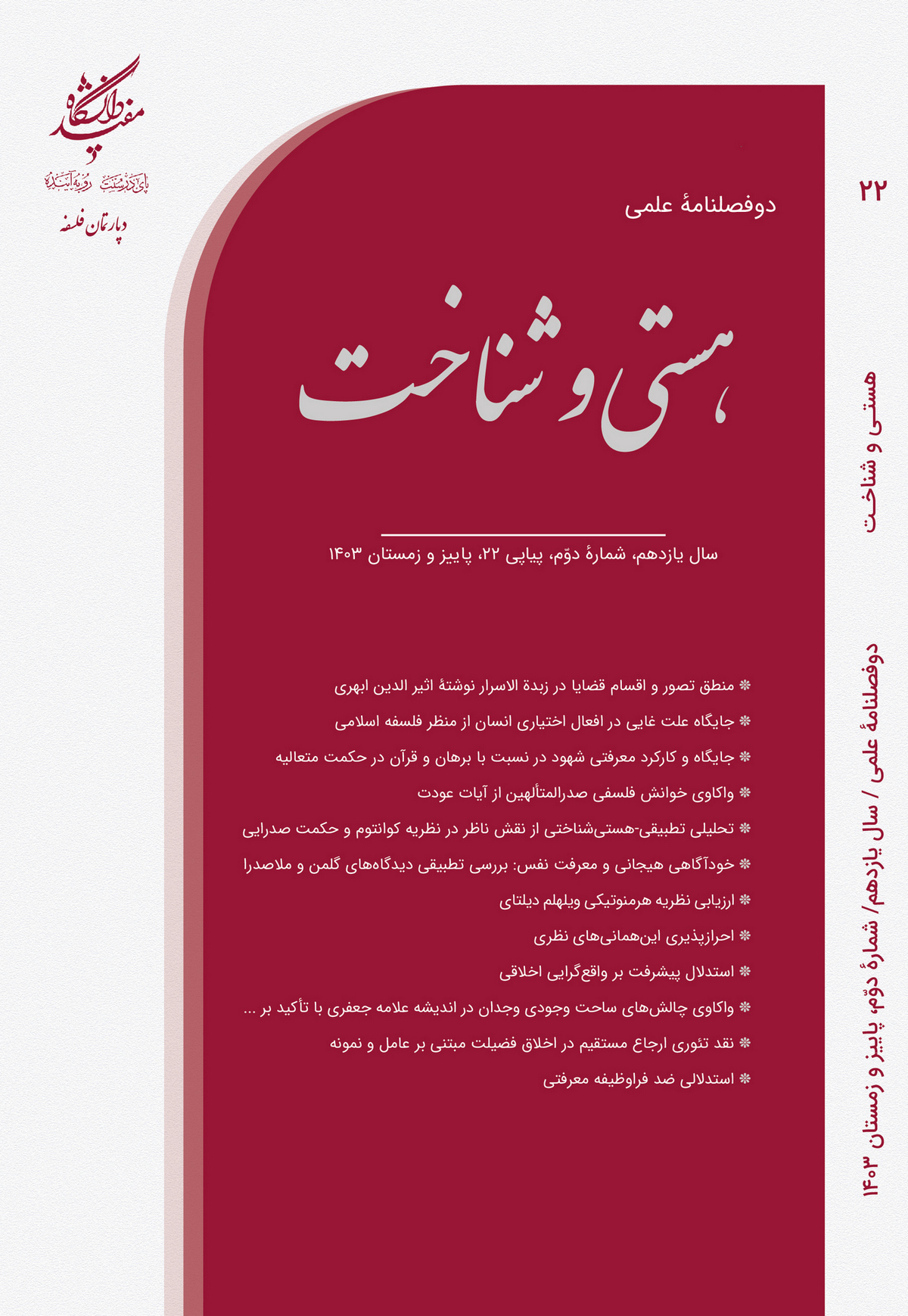
دوفصلنامۀ علمی هستی و شناخت

دوفصلنامۀ علمی هستی و شناخت

جایگاه و کارکرد معرفتی شهود در نسبت با برهان و قرآن در حکمت متعالیه

نوع مقاله : مقاله پژوهشی

نویسنده
ندارم.
10.22096/ek.2026.2086920.1637
چکیده
حکمت متعالیه با تحوّل بنیادین در مبانی معرفت‌شناختی، هم‌افزاییِ سازنده‌ای میان منابع معرفت (برهان، شهود و قرآن) پدید آورده است. مسئله‌ی محوری این پژوهش، واکاوی کارکرد معرفتی شهود در تعامل با دو منبع مهم شناخت، یعنی برهان فلسفی و قرآن کریم است. پرسش اصلی آن است که شهود چه نقشی در شکل‌گیری، جهت‌دهی و تأیید وجودیِ صدق براهین عقلی (گذار از علم‌الیقین به عین‌الیقین) و همچنین در تفسیر و تأویل آیات قرآن دارد؟ این پژوهش با تکیه بر آثار صدرالمتألهین به دنبال تبیین این فرضیه است که شهود در حکمت متعالیه نه تنها در تقابل با برهان نیست، بلکه به عنوان ابزاری کارآمد در اصلاح پیش‌فرض‌ها، کشف حد وسط، تأسیس مبانی برهان و انکشاف عینی نتایج آن عمل می‌کند. در حوزه قرآن پژوهی نیز، شهود با گذار از سطح ظاهر الفاظ، در دفع تعارضات ظاهری، فهم عمیق لطایف و تأویل متشابهات نقشی انکارناپذیر ایفا می‌کند. یافته‌های پژوهش نشان می‌دهد که بدون بهره‌گیری از شهود، فهم قرآن در سطح ظواهر لغوی و براهین عقلی باقی می‌ماند و دسترسی به حقیقت وجودی و بطن آیات میسر نخواهد گشت؛ امری که با ساحت جاودانه و نوری این منبع معرفت سازگار نیست.
کلیدواژه‌ها
موضوعات

عنوان مقاله English

The Epistemological Position and Function of Intuition in Relation to Argument and the Quran in Transcendent theosophy

نویسنده English

Mostafa zarei
nothing
چکیده English

Transcendent theosophy, through a fundamental transformation in epistemological foundations, fosters a constructive synergy among the sources of knowledge: demonstration, intuition, and the Quran. This research analyzes the epistemic function of intuition in interaction with philosophical demonstration and the Holy Quran. The central question is: What role does intuition play in forming, directing, and ontologically validating rational proofs (the transition from ‘ilm al-yaqin to ‘ayn al-yaqin), as well as in interpreting and allegorically exeging Quranic verses? Relying on Mulla Sadra’s works, this study elucidates the hypothesis that in Transcendent Theosophy, intuition is not opposed to demonstration but serves as an efficient tool for correcting presuppositions, discovering the mean, establishing demonstration’s foundations, and revealing its objective results. In Quranic studies, intuition plays an indispensable role in overcoming apparent contradictions, understanding semantic subtleties, and interpreting ambiguous verses beyond the surface level of words. Findings indicate that without intuition, Quranic understanding remains confined to literal meanings and rational proofs. Access to the ontological truth and inner essence of the verses becomes unattainable, an outcome incompatible with the eternal and luminous nature of this epistemic source.

کلیدواژه‌ها English

Intuition and Demonstration
Epistemic Function of Intuition
Intuition and Quranic Allegorical Exegesis
Intuition and Quranic Interpretation
Transcendent Theosophy
Mulla Sadra
ارسال نظر در مورد این مقاله
نام را وارد کنید.
نشانی پست الکترونیکی را به درستی وارد کنید.
وابستگی سازمانی را به درستی وارد کنید.
توضیحات را وارد کنید (حداقل 50 حرف)
CAPTCHA Image
شناسه امنیتی را به درستی وارد کنید.

مقالات آماده انتشار، پذیرفته شده
انتشار آنلاین از 10 تیر 1405