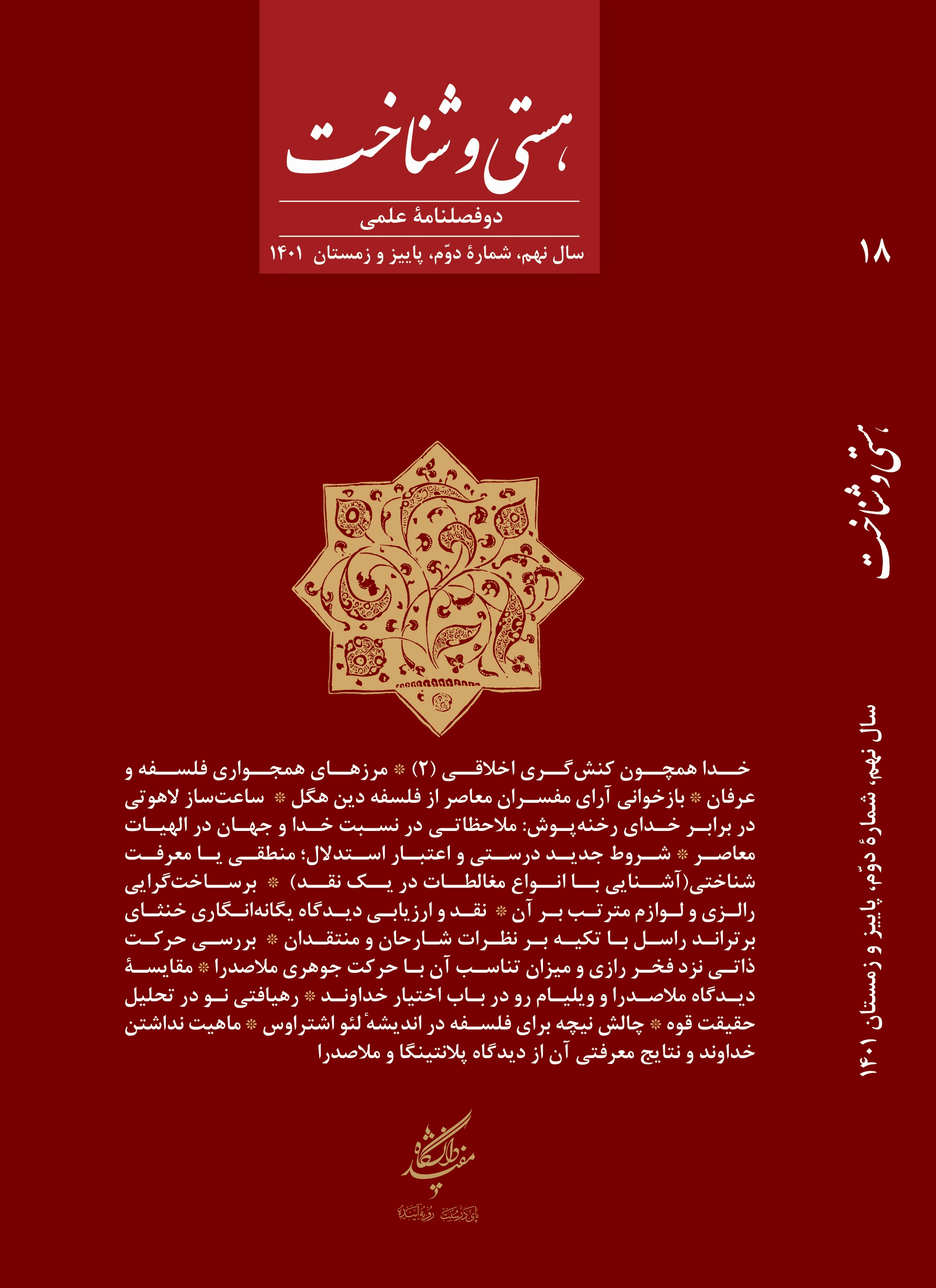
دوفصلنامۀ علمی هستی و شناخت

دوفصلنامۀ علمی هستی و شناخت

بازخوانی آراء مفسرین معاصر از فلسفه دین هگل

نوع مقاله : مقاله پژوهشی

نویسنده
استادیار، دپارتمان فلسفه، دانشگاه مفید، قم، ایران.
چکیده
کانت با اثبات عدم‌ توانایی شناخت عقلانی از امر نامشروط و مفهوم خدا سبب اولین مضمون‌سازی‌ها از فلسفه دین شد. درمقابلْ هگل صراحتاً اعلام داشت موضوع فلسفه همان موضوع دین یعنی خدا است. این امر پرسشی اساسی را پدیدار می‌کند، اگر موضوع فلسفه همان دین است، آیا هگل به شیوه پیشاکانتی به تفوق دین بر فلسفه باور دارد و فلسفه را در چارچوب درک مسیحی می‌فهمد؟ یا بالعکس؟ هر یک از مفسرین پاسخی متفاوت به این پرسش داده‌اند و مسئله این مقاله نیز در همین هنگام شکل می‌گیرد. تأمل در این موضوع سبب می‌شود تا در هنگام خوانش دیدگاه دینی هگل به‌واسطه این تفسیرها دچار خلط روش‌شناسی نشویم.
بنابراین، می‌کوشیم در ضمن واکاویِ علل اختلاف آراء مفسرین، تفسیرها را دسته‌بندی کنیم. سپس به تحلیل آن‌ها پرداخته، نقاط شباهت و افتراق‌شان را نشان می‌‌دهیم و روش‌شناسی هر یک را تبیین می‌کنیم. درنهایت، می‌کوشیم تا ضرورت حفظ تکثر پارادایم‌های تفسیری را به‌واسطه امکان‌ها و عقلانیت‌های مختلف آن‌ها نشان ‌دهیم و از این طریق تبیین کنیم که اساساً نباید به‌دنبال جمع تفسیری بود. زیرا علاوه بر اینکه هر تفسیری سبب مواجهه‌ای نو و پاسخی جدید به مسئله‌ها می‌شود، اساساً هرگونه داوری برای ترجیح یک تفسیر بر دیگر تفسیرها تابعی از معیارها و پیش‌فرض‌هایی است که هیچ ترجیحی بر یکدیگر ندارند.
کلیدواژه‌ها

موضوعات


عنوان مقاله English

Re-reading the views of contemporary commentators on Hegel's philosophy of religion

نویسنده English

Mohammad Kheyri
Assistant Professor, Department of Philosophy, Mofid University, Qom, Iran.
چکیده English

Hegel explicitly declared that the subject of philosophy is the same as that of religion, namely, God. This raises a fundamental question: if the subject of philosophy is religion, does Hegel believe in the superiority of religion over philosophy in a pre-Kantian manner and understand philosophy within the framework of Christian understanding, or vice versa? Each commentator has provided a different answer to this question, and the issue of this article arises from these differing opinions. Reflecting on this issue prevents us from methodological confusion when reading Hegel's religious views due to these interpretations. Therefore, we strive to categorize the interpretations while examining the reasons for the differences in the commentators' views. Subsequently, we analyze them, highlight their similarities and differences, and explain the methodology of each. Finally, we endeavor to demonstrate the necessity of preserving the plurality of interpretive paradigms through their various possibilities and rationalities. In this way, we explain that seeking reconciliation between interpretations is fundamentally unnecessary. Each interpretation leads to a new encounter and a novel answer to problems, and any judgment to prefer one interpretation over another is inherently based on criteria and presuppositions that have no intrinsic preference over one another.

کلیدواژه‌ها English

Hegelian philosophy of religion
metaphysical interpretation
non-metaphysical interpretation
mystical interpretation
سیاهه منابع
الف- منابع لاتین:
Beiser, Frederick. “Hegel, A Non-Metaphysician? A Polemic Review of H T Engelhardt and Terry Pinkard (eds), Hegel Reconsidered.” Bulletin of the Hegel Society of Great Britain 16 (1995): 1-13. doi:10.1017/S0263523200005504.
Beiser, Frederick. Hegel. New York and London: Routledge, 2005.
Desmond, William. Beyond Hegel and dialectic: Speculation, cult, and comedy. New York: State University of New York Press, 1992.
Desmond, William. Hegel’s God: A Counterfeit Double?. Burlington: Ashgate, 2003.
Desmond, William. Is There a Sabbath for Thought? Between Religion and Philosophy. New York: Fordham University Press, 2005.
Hegel, Georg Wilhelm Friedrich. Phenomenology of Spirit. Translated by A. V. New York: Oxford University Press, 1977.
Hodgson, Peter c. “Hegel’s Philosophy of Religion.” In The Cambridge Companion to Hegel and Nineteenth-Century Philosoph, edited by Frederick C Beiser, 230-252. New York: Cambridge University Press, 2008.
Hodgson, Peter C. Hegel and Christian Theology: A Reading of the Lectures on the Philosophy of Religion. New York: Oxford University Press, 2005.
Jaeschke, Walter. “Philosophy of Religion after the Death of God.” In Philosophy and Religion in German Idealism, edited by William Desmond, Ernst-Otto Onnasch, and Paul Cruysberghs, 1-19. New York: Springer Science & Business Media, 2005.
Jaeschke, Walter. Reason in Religion: The Foundations of Hegel's Philosophy of Religion. Translated by J. Michael Stewart, and Peter C. Hodgson. California: University of California Press, 1990.
Lewis, Thomas A. “Beyond the Totalitarian: Ethics and the Philosophy of Religion in Recent Hegel Scholarship.” Religion Compass 2, (July 2008): 556-574. https://doi.org/10.1111/j.1749-8171.2008.00077.x.
Magee, Glenn Alexander. “Hegel and Mysticism.” In The Cambridge Companion to Hegel and Nineteenth-Century Philosophy, edited by Frederick C Beiser, 253-280. New York: Cambridge University Press, 2008.
Magee, Glenn Alexander. Hegel and the Hermetic Tradition. Ithaca and London: Cornell University Press, 2001.
O'Regan, Cyril. The Heterodox Hegel. New York: State University of New York Press, 1994.
Pinkard, Terry. “What is the non-metaphysical reading of Hegel? A reply to Frederick Beiser.” Hegel Bulletin 17, no. 2 (1996): 13-20. https://doi.org/10.1017/S0263523200005711.
Pinkard, Terry. Hegel: A Biography. New York: Cambridge University Press, 2000.
Rockmore, Tom. “Hegel on Reason, Faith and Knowledge.” In Philosophy and Religion in German Idealism, edited by William Desmond, Ernst-Otto Onnasch, & Paul Cruysberghs, 125-137. New York: Springer Science & Business Media, 2005.
Williams, Robert R. Tragedy, recognition, and the death of God: Studies in Hegel and Nietzsche. New York: Oxford University Press, 2012.
ارسال نظر در مورد این مقاله
نام را وارد کنید.
نشانی پست الکترونیکی را به درستی وارد کنید.
وابستگی سازمانی را به درستی وارد کنید.
توضیحات را وارد کنید (حداقل 50 حرف)
CAPTCHA Image
شناسه امنیتی را به درستی وارد کنید.